
Wet Press Kerbstone & Slab Production Line
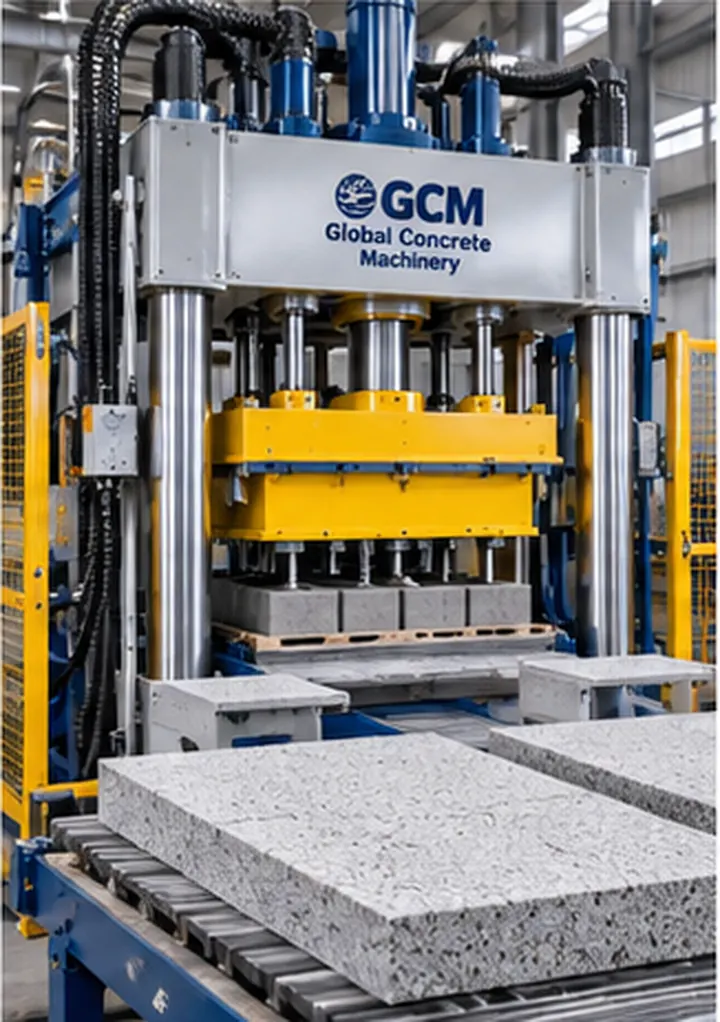
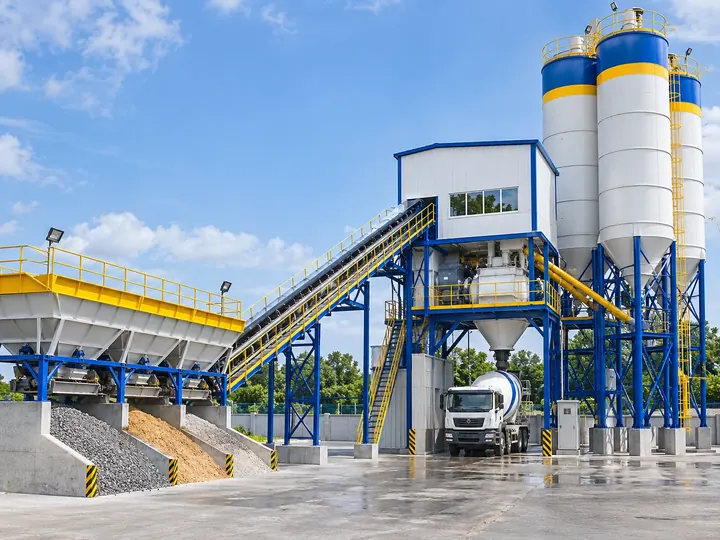
This production concept combines accurate wet-concrete preparation with high-pressure forming, vacuum extraction, product take-off and curing.
Core Equipment
- GCM WP-6000 Wet Press System
- Concrete batching and mixing system
- Precision dosing
- Vacuum system
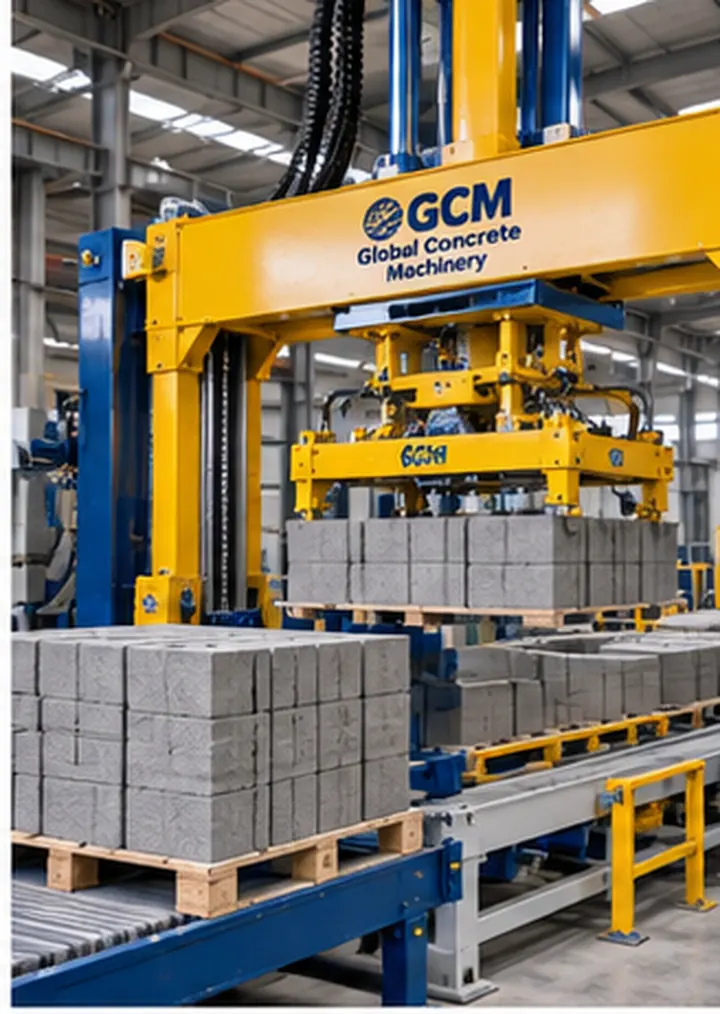
- Product take-off and palletizing
- Curing and dispatch handling
Typical Products
Kerbstones, paving slabs, tactile products, washed-concrete products and selected architectural wet-pressed units.
Engineering Basis
Product dimensions, daily output, mould count, curing method and required automation should be defined before final line layout.
Request a Line Configuration
Send project requirements to info@globalconcretemachinery.com.
Production Concept
Wet Press Kerbstone & Slab Production Line is designed for high-pressure production of dense kerbstones, slabs and specialty architectural products. The line should be defined around kerbstones, slabs, tiles and other products suited to hydraulic wet-press forming. Before equipment is sized, the product list should include dimensions, mould or forming method, expected weekly sales mix and required quality. This separates the normal production duty from occasional specialty orders. The resulting specification becomes the basis for concrete demand, pallet or bed flow, curing, finishing and packaging rather than allowing one machine datasheet to dictate the factory concept.
Output Planning
Real line capacity is determined by the slowest required stage. Calculate output product by product using pieces per cycle or production length, realistic cycle time, operating minutes, changeovers and expected availability. Then compare the result with batching, transfer, curing and dry-side capacity. For Wet Press Kerbstone & Slab Production Line, particular attention should be paid to concrete consistency, hydraulic pressing, mould handling, vacuum or dewatering where applicable, curing and downstream handling. Short production peaks should not immediately create congestion, but oversized buffers can add cost and inventory without increasing sales. A balanced line is easier to operate and usually produces more consistently over a full shift.
Upstream Material Flow
In the context of Wet Press Kerbstone & Slab Production Line, concrete supply must match the production rhythm and the sensitivity of the selected product. Aggregate grading, moisture, cement, water and admixtures should be controlled by recipe. Storage capacity must support normal loader and delivery cycles, while the mixer should discharge at the time the forming process needs material. Dry-cast lines are especially sensitive to moisture drift because the mix must fill and compact without flowing. Wet-press, tile and precast processes have different requirements, so the material system should be selected for the actual production technology rather than copied from another factory.
Forming Equipment and Tooling
In the context of Wet Press Kerbstone & Slab Production Line, the forming stage is where product geometry and process settings meet. Tooling or forming components must match the machine platform and approved product drawing. Operators need safe changeover and inspection methods, and the factory needs space to store moulds or product-specific equipment without damage. Commissioning should establish the relationship between material condition, machine settings and finished quality. Once the process is stable, approved recipes and setup data should be controlled so routine production does not depend on individual memory.
Curing Capacity
In the context of Wet Press Kerbstone & Slab Production Line, fresh concrete products must gain sufficient strength before they are exposed to aggressive handling. Curing capacity should be calculated from production rate and residence time. Temperature, humidity and air movement should suit the selected method and remain reasonably consistent throughout the storage area. In pallet-based plants, rack occupancy and product age should be traceable. In tile, wet-press and precast production, curing also determines when cutting, polishing, lifting or packaging can begin. Releasing products too early can move damage from the curing area into later processes.
Finished-Product Flow
In the context of Wet Press Kerbstone & Slab Production Line, after curing, the line may include lowerators, inspection, finishing, cubing, wrapping, cranes or forklifts depending on the product. Finished-product flow should protect edges and surfaces while forming packs or stacks that suit warehouse and transport requirements. Yard design matters as much as the machine room: forklift congestion, inadequate storage or poorly planned truck loading can restrict a capable production line. The chosen packaging method should also reflect customer logistics, transport distance and whether products require protection from movement or surface damage.
Automation Philosophy
In the context of Wet Press Kerbstone & Slab Production Line, automation should coordinate the stations that need synchronized operation while allowing safe isolation and maintenance of individual machines. Recipe management, alarm history, interlocks, counters and status displays help operators understand the line. Fault recovery must be considered during design; the plant should know what happens to material and pallets when one station stops. Operators need training in abnormal conditions, not only normal sequences. Software and parameter backups, user permissions and clear maintenance modes should be part of commissioning so the control system remains supportable after handover.
Civil and Utility Requirements
In the context of Wet Press Kerbstone & Slab Production Line, the building must support machine loads, foundations, service access, clear height, doors, cranes, electrical distribution, compressed air, water, drainage and safe logistics. Drawings should show maintenance envelopes and removal routes for major components. Raw-material vehicles, forklifts and pedestrians should be separated where practical. For export projects, transport dimensions, unloading equipment and installation sequence should be reviewed before shipment. If future expansion is planned, reserve the physical space and utility capacity before permanent structures or underground services make expansion unnecessarily expensive.
Ramp-Up and Future Capacity
Start-up should progress from mechanical completion and safety checks to dry cycles, calibration, material trials, product trials and sustained operation. Output should be increased only after quality and process stability are established. The commissioning record should include approved settings, product results and outstanding actions. For Wet Press Kerbstone & Slab Production Line, future growth should be considered at the same time as startup: identify which stations can accept more capacity, which interfaces are already reserved and which expansion would require a planned shutdown. This turns the initial line into a platform for growth rather than a fixed one-time installation.
Operational Readiness for Wet Press Kerbstone & Slab Production Line
Before normal production begins, the plant team should confirm that the people, materials and site services are ready for the complete process, not only for the main machine. Operators should know the approved recipes, product change procedure and alarm escalation path. Maintenance staff should have the critical tools and spare parts needed for early operation. Quality personnel should have agreed product drawings, sampling frequency and acceptance limits. Raw-material storage and finished-goods areas should be prepared for the planned flow. For this line, special readiness attention belongs to concrete consistency, hydraulic pressing, mould handling, vacuum or dewatering where applicable, curing and downstream handling. Addressing these points before the first commercial order reduces startup pressure and helps the line reach stable output without relying on temporary workarounds.